Water Heater Repair in Brighton, CO
Cold showers, rumbling noises and puddles around the tank all have different causes. Some are quick repairs. Some mean the tank is done. The symptoms tell you which, and the first call can sort it.
Call (720) 794-0054- Gas and electric
- Repair or replace advice
- Line answered 24/7
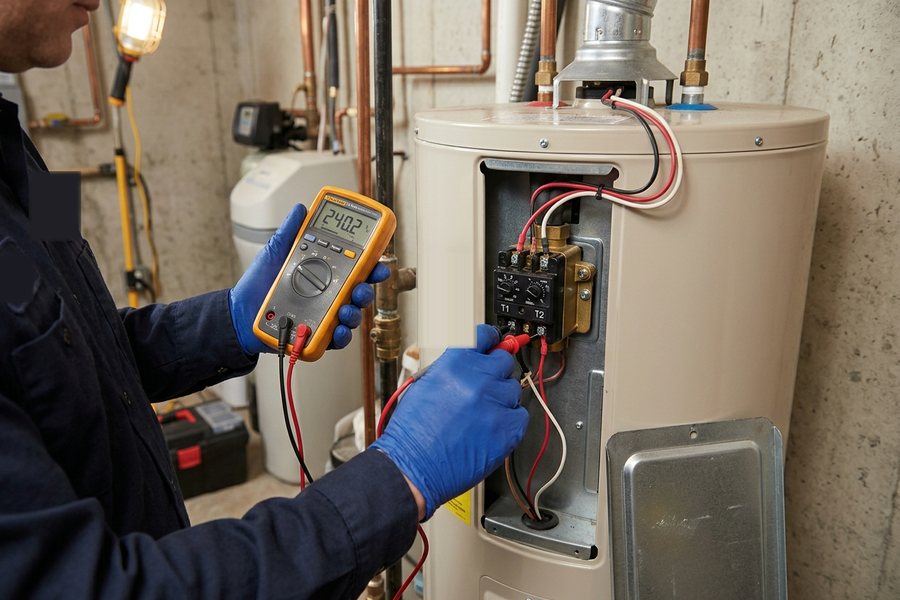
What your symptom usually means
Common problems and likely causes
| Symptom | Likely cause | Typical path |
|---|---|---|
| No hot water, gas unit | Pilot out, thermocouple or gas control valve | Repair |
| No hot water, electric unit | Tripped breaker, failed element or thermostat | Repair |
| Lukewarm water | Sediment, a failed element or a dip tube problem | Repair or flush |
| Rumbling or popping noise | Sediment hardened at the bottom of the tank | Flush, or replace if old |
| Water around the base | Fitting leak, relief valve or a leaking tank | Fitting is a repair. Tank leak is replacement |
| Rusty hot water | Corroding tank or anode rod | Inspect. May lead to replacement |
| Hot water runs out fast | Failed element, sediment or undersized tank | Repair or review sizing |
Hot water heater repair in Brighton
People search for water heater repair in Brighton, CO under several names: hot water heater repair, water heater service or simply no hot water. They all point to the same visit. A plumber checks the fuel supply, the controls and the tank, then tells you whether a part will fix it.
Say whether the unit runs on gas or electricity, how old it is and what changed when the hot water stopped. Those three details shorten the diagnosis.
If the tank is leaking
- Close the cold water valve on the pipe above the heater.
- Shut the gas control or flip the breaker so the unit cannot fire dry.
- Do not touch wet wiring or standing water near outlets.
- Find where the water comes from. A fitting or a valve can be repaired. A leak from the tank itself cannot.
- Place a bucket or pan under a slow drip and photograph the unit.
- Call and describe the location of the water.
A tank that leaks from the bottom has usually failed inside. See water heater replacement for that case. A leak from a pipe above the tank is often a simple fitting fix.
No hot water or a leak at the tank?
Shut off the cold supply and power or gas to the unit, then call. The dispatcher will book the earliest window.
Gas water heater troubleshooting
Standing pilot units rely on a flame heating a thermocouple. If the flame blows out, the gas valve closes. Relighting is safe only if you follow the label on the tank and smell no gas. Rotten-egg odor near the heater? Walk everyone out and phone the gas company from the driveway. Strike no matches and flip no switches. The plumber handles the appliance after the gas company clears the leak. Gas piping work is covered on the gas line page.
Newer units include sealed combustion and electronic ignition. Those need proper venting and no blocked air supply. Keep storage away from the unit.
Electric water heater troubleshooting
Electric heaters have two heating elements and two thermostats. A tripped breaker is the first thing to check. If the breaker holds, a failed upper element often means no hot water. A failed lower element means a shorter supply. Power must be off at the breaker before any panel on the tank is opened. Elements and thermostats are inexpensive parts, but the work is only safe with the right tools.
Repair or replace
Age, condition and cost decide. A newer tank with a failed part is worth repairing. An older tank with rust, a leak at the seam or repeated failures is not. Ask the plumber for the age printed on the data plate and for both numbers when it is borderline.
If you are replacing, consider capacity, fuel and venting. A tankless unit changes the gas supply and venting needs, so it is a larger project.
Relief valves, expansion tanks and sediment
The relief valve on the tank is a safety part. A drip or discharge from it means pressure or heat is running high. Never plug it. Phone for service. An expansion tank absorbs pressure when water heats. A waterlogged tank can cause relief valve drips and fixture noise. Flushing the tank removes sediment, and hard water makes that more important. See water softener service if scale is a recurring problem.
What changes the price
Repair pricing depends on the part, the unit and access. Ask the dispatcher for a clear quote before work starts.
Part needed
A thermostat, element, thermocouple or valve each differs.
Fuel type
Gas and electric units use different parts.
Age and brand
Older models may need hard-to-find parts.
Location
Attics, closets and tight utility rooms take longer.
Hours
A no-hot-water call at night is handled as an emergency.
Questions callers ask us
Gas units often have a pilot or thermocouple problem. Electric units usually have a tripped breaker, failed element or thermostat.
Yes, when water is spreading. Close the cold valve, cut power or gas to the unit and call.
Yes in most cases, unless there is a gas smell. If you smell gas, leave and call the gas utility first.
Many tank units last roughly ten years or so, depending on use and water quality. The data plate shows the age.
A newer tank with a failed part is usually worth repairing. An older tank with a leak or rust usually is not.
Sediment settles at the bottom and traps steam bubbles that pop as they escape. A flush helps, though a tank of great age may be nearly spent.
Yes. Landlords and property managers can call the dispatcher directly and share access details.
Calls are answered all night. The arrival window depends on the day's schedule and your address, so ask what is open first.
Get hot water back
Call at any hour. Name the fuel type and what the unit is doing so the right parts ride along.