Toilet Repair and Installation in Brighton, CO
A toilet that runs, rocks or weeps at the base wastes water and invites floor damage. Most problems come from a handful of cheap parts. Knowing which part saves a repair call or tells you when to replace the whole toilet.
Call (720) 794-0054- Repair or replace
- Water-saving upgrades
- Line answered 24/7
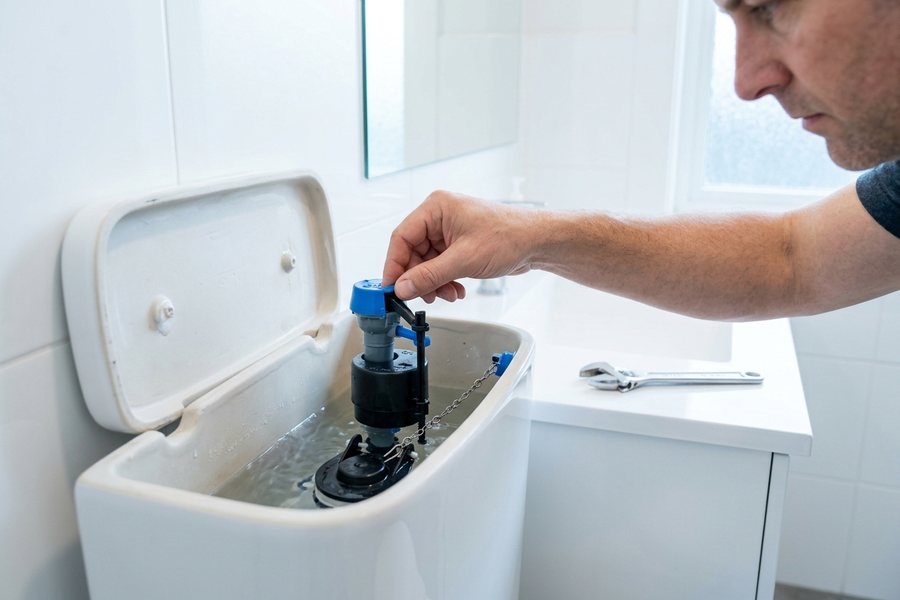
Match the symptom to the part
Common toilet problems
| Symptom | Likely cause | Fix |
|---|---|---|
| Runs on after flushing | Tired flapper, or a chain pulled too snug | Replace the flapper, adjust the chain |
| Phantom refill every few minutes | Flapper leaking slowly into the bowl | Replace the flapper |
| Hissing while the tank fills | Worn fill valve | Replace the fill valve |
| Weak or incomplete flush | Clogged rim jets or low water level | Clear jets, adjust level |
| Water at the base | Failed wax ring or loose bolts | Reset the toilet with a new seal |
| Toilet rocks side to side | Loose closet bolts or uneven floor | Re-secure and shim |
| Water leaks from the tank bolts | Worn tank-to-bowl gasket | Replace gasket and bolts |
A dye tablet, or a little food coloring stirred into the tank, will expose a flapper leak. If color appears in the bowl within fifteen minutes without flushing, the flapper is the culprit.
Running toilets add up
A running toilet can waste a lot of water in a day without making much noise. The bill is often the first sign. If you see a rise you cannot explain, test every toilet first, then check the meter. See leak detection if the toilets are fine and the meter still moves.
Most running toilets trace back to one of three parts, and the dye test below shows which one.
Overflowing right now
- Lift the tank lid and press the flapper shut so no more water reaches the bowl.
- Rotate the stop valve at the wall to the right until it stops.
- Do not flush again until the clog is cleared.
- Use a flange plunger. Seal the drain and push and pull with steady strokes.
- If other fixtures also back up, the problem is further down. See drain cleaning.
- Call if water keeps rising or the plunger does nothing.
Toilet flooding or won't stop running?
Close the shutoff valve behind it and call. The dispatcher will plan the fix.
Rocking or leaking at the base
Under the base, a wax ring or rubber gasket joins the toilet to the drain flange. When the toilet shifts, the seal fails and water seeps out. The leak may be small, but it rots the subfloor. A soft spot or a stain on the ceiling below can be a sign.
The repair is to lift the toilet, inspect the flange, replace the seal and set it back. A cracked flange or rotted floor needs repair first. Ask the plumber to check the floor when the toilet is up.
Installing a new toilet
- Pick the rough-inMeasure from the finished wall to the center of the drain pipe. Twelve inches is typical, though older homes differ.
- Choose height and shapeComfort-height and elongated bowls are popular. Make sure they fit the space.
- Check the water useLook for a modern high-efficiency model. Rebates may exist from your utility, so ask.
- Remove and prepThe old toilet is lifted, the flange is inspected and the floor is cleaned.
- Set, connect and testThe new toilet is secured, the supply connected and flush tested for leaks.
Bring the model number if you have already bought a toilet. Otherwise ask the plumber what is available.
Accessibility and extra bathrooms
Taller seats, grab bar blocking and moving fixtures are all possible during a remodel. A new bathroom in a basement or garage requires drain planning. Bath remodels are covered on the shower and bathtub page. Landlords with several units can book the same fix across a building. Share the unit list when you call.
What changes the price
Parts repairs are quick. Replacements and floor repairs take longer. Ask the dispatcher for a clear quote before work starts.
Part or full toilet
A flapper or fill valve differs from a new toilet.
Fixture choice
Toilet style and features vary widely.
Flange and floor
Damage found under the toilet adds scope.
Shutoff valve
Old stop valves are often replaced at the same time.
Hours
A flooding toilet at night is handled as an emergency.
Questions callers ask us
A worn flapper is the most common cause, followed by a faulty fill valve. A plumber can replace either quickly.
The wax ring or seal has probably failed, or the bolts are loose. Do not wait. The leak can damage the floor.
Yes. Tell the dispatcher the model so the plumber can check fit and parts.
The cause can be a partial blockage down the line, a poorly flushing toilet or too much paper. A camera look can separate them.
Yes, and it is often done during a toilet job.
Usually a short visit, unless the flange or floor needs repair.
Yes. Property managers can call the dispatcher and share access details.
Stop the leak, stop the noise
Call to repair or replace a toilet and fix the cause, not just the symptom.