Leak Detection in Brighton, CO
A meter that keeps turning, a bill that keeps climbing, or a stain with no source all point to one job: finding the leak before it finds more of your house. Call and the plumber starts with a diagnosis instead of a guess.
Call (720) 794-0054- Line answered 24/7
- Homes, rentals and commercial
- Diagnosis before repair
Signs you may have a hidden leak
- The meter dial still turns with every fixture, appliance and ice maker off.
- The bill climbs a little each month though nobody in the house uses more water.
- A floor feels warm or damp, or flooring has started to lift near a wall or the water heater.
- You hear water running at night when nothing is on.
- A ceiling or wall shows a stain, a paint bubble or a musty smell.
- A stripe of lawn turns greener, soggy or sunken along the route from the meter to the house.
- Water pressure faded slowly over a few weeks.
- A utility notice or leak alert says water is moving through your meter when it should not.
Check the meter before you call
Ten minutes at the meter tells you whether water is really leaving the system and roughly where. It also gives the dispatcher something concrete to work with.
- Shut everything offClose every faucet and hold the dishwasher, washer, ice maker and sprinkler timer.
- Find the meterSome meters sit in a pit near the curb. Others are inside the house, often in a utility room or basement.
- Check the leak indicatorMany meters carry a small triangle or star that spins at the slightest trickle. Note the register reading.
- Wait thirty minutesUse no water at all, then read it again. Any change means water is escaping somewhere.
- Close the house mainA meter that keeps moving with the main shut means the leak is outdoors on the service line. A meter that stops means it is indoors.
One more quick test catches the most common culprit. Stir a little food coloring into each toilet tank and leave it for fifteen minutes with no flushing. Tinted bowl water means a leaking flapper, and that is a repair for toilet repair, not a buried pipe.
How the diagnostic works
The plumber isolates the system first. Pressure is held on one section at a time, such as the line from the meter, the hot side, the cold side and then single branches. That shrinks a whole house down to a few feet of pipe.
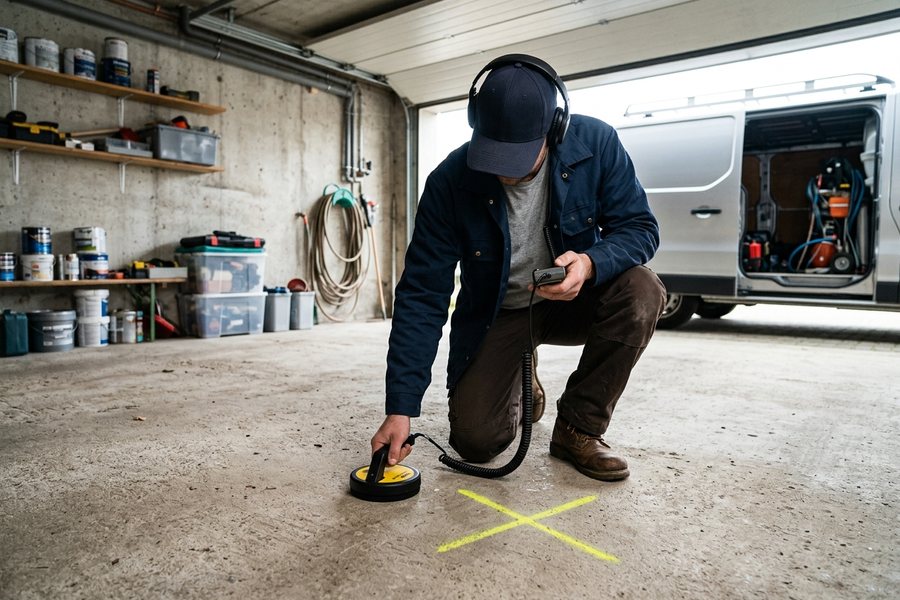
Listening and imaging come next. Acoustic gear hears the hiss pressurized water makes as it escapes. Thermal imaging shows warm or cool patches where lines and wet materials hide behind a surface. A drain camera checks lines that carry waste, since a drain leak behaves differently from a supply leak.
The result is a marked spot instead of an open-ended search. That keeps any opening in a wall, floor or driveway small and planned.
Common methods and what they are used for
| Method | What it finds | Typical use |
|---|---|---|
| Pressure test | Which section of pipe is losing pressure | First step on almost every job |
| Acoustic listening | The sound of a pressurized leak through pipe, soil or concrete | Slab, wall and buried line leaks |
| Thermal imaging | Temperature differences behind a surface | Hot water lines, wet insulation, floor heat |
| Drain camera | Cracks, offsets and root entry inside drain lines | Suspected sewer or drain leaks |
| Moisture meter | Damp materials around a suspected source | Ceilings, walls and cabinets |
Not every truck carries every tool, and the right method depends on the pipe and where it runs. Tell the dispatcher what you suspect and ask which methods will be used on your job.
Meter still running? Call now.
Tell the dispatcher what the meter and the bill are doing. Keep the main closed while you wait.
Where the leak sits changes the plan
Ceiling and wall leaks
A stain below a bathroom rarely sits under the real source. Water follows a joist before it drips. The plumber works back from the stain to the supply or drain connection above it, and a moisture reading confirms the path before anything gets opened.
Under the house or in a crawl space
Crawl space access lets a technician hear and see most connections from below, which often avoids cutting finished floors. Concrete floors need a different approach. See slab leak detection and repair for that case.
Under a driveway, patio or garage floor
Pressure tests and acoustic work narrow the spot first. Then the plan decides between breaking out a small section, rerouting the line overhead or replacing the run. Ask whether the plumber handles the saw cutting and patching or quotes concrete work separately.
On the service line
A service line leak shows as a meter that moves with the main closed, a wet strip of ground or a patch of unusually green lawn. Repair choices are laid out in the guide to service line repair options.
Duplexes, triplexes and fourplexes
Multi-unit buildings need the leak narrowed to a shared line or a single unit before anyone enters a tenant's space. Landlords and property managers should have the meter location, unit shutoffs and access times ready. Larger sites with plazas, several meters or floor drains fall under commercial plumbing.
A previous plumber could not find it
This happens often. A first visit that only checked visible pipe, or tested the house as one big system, can miss a slow leak. A second pass that isolates each section in order and records pressure at every step usually succeeds where the first did not.
Bring any notes, photos or invoices from the earlier visit. They show what has already been ruled out and save time on yours.
What drives the cost of leak detection
Pricing depends on access, pipe type, how many sections need testing and what gets found. Ask the dispatcher for a clear quote before work starts. Detection and repair are scoped separately so you can decide what to do once the leak has a location.
Suspected location
A leak under concrete or a buried line takes more testing than a leak at an exposed fitting.
Size of the property
More plumbing runs mean more sections to isolate and test.
Access to the pipe
Finished ceilings, tight crawl spaces and long yard runs add time.
Methods needed
Simple pressure checks cost less time than a combined acoustic, thermal and camera pass.
Repair after the find
A fitting is a short fix. A buried or slab line is a larger project with its own scope.
Urgency and hours
An active leak at night is handled differently from a slow drip that can wait for morning.
Before the plumber arrives
- Shut the main valve if water is escaping or the meter is racing.
- Photograph the meter reading and any stains, with the date.
- Keep cars and heavy equipment off the suspected area of a yard or driveway.
- Hold off on cutting drywall or digging. A marked spot is cheaper to open than a guess.
- Move rugs, boxes and electronics away from wet areas.
- Gather recent water bills and any notes from an earlier plumber.
- Mention a closing date, an inspection report or a waiting tenant so the visit can be planned around it.
After the leak is found
A loose fitting or short section is a quick repair. A split in a copper line may lead to burst or cracked pipe repair. Repeated failures in old piping point toward repiping. If water already soaked drywall or flooring, water damage restoration is a separate crew and a separate phone line.
Leaks tied to a drain or sewer line follow a different path. A camera inspection leads into sewer line repair when the damage is in the waste line.
Questions callers ask us
Yes. Leaks in walls, under floors or along buried pipe can run for weeks before anything shows. Check the meter with every tap closed. If it turns, a diagnostic visit can trace where the water goes.
Most leak searches mix pressure testing, listening gear, thermal scans and a drain camera. The pipe and its location decide the mix. When you call, ask which methods will be used on your job.
The goal is a marked spot small enough that any opening stays targeted. How tight the mark gets depends on pipe material, depth and background noise. Ask what to expect for your property before booking.
Repairs are quoted after the leak has a location, and you decide whether to go ahead. The same call can cover both steps, so say up front that you want the repair if the plumber finds it.
If the meter keeps moving with the main closed, the trouble is on the service line. That is a water line job. The city handles the main and meter, and the property side depends on where your meter sits.
Irrigation, pool and spa systems are separate trades. A plumber can usually check the house supply line feeding them. Describe the setup on the phone and the dispatcher will say what plumbing can cover.
Mention the closing date and the inspector's note on the call. The line is answered around the clock and the dispatcher books the earliest window that fits your address and schedule.
Someone picks up every hour of every day. Your address and the day's schedule set the arrival time, so ask what is open first.
Find the leak before it finds your floors
Call any hour. The dispatcher can book the first diagnostic window for your address and tell you what to expect on cost.